
Webinar Series: AI in Financial Analysis
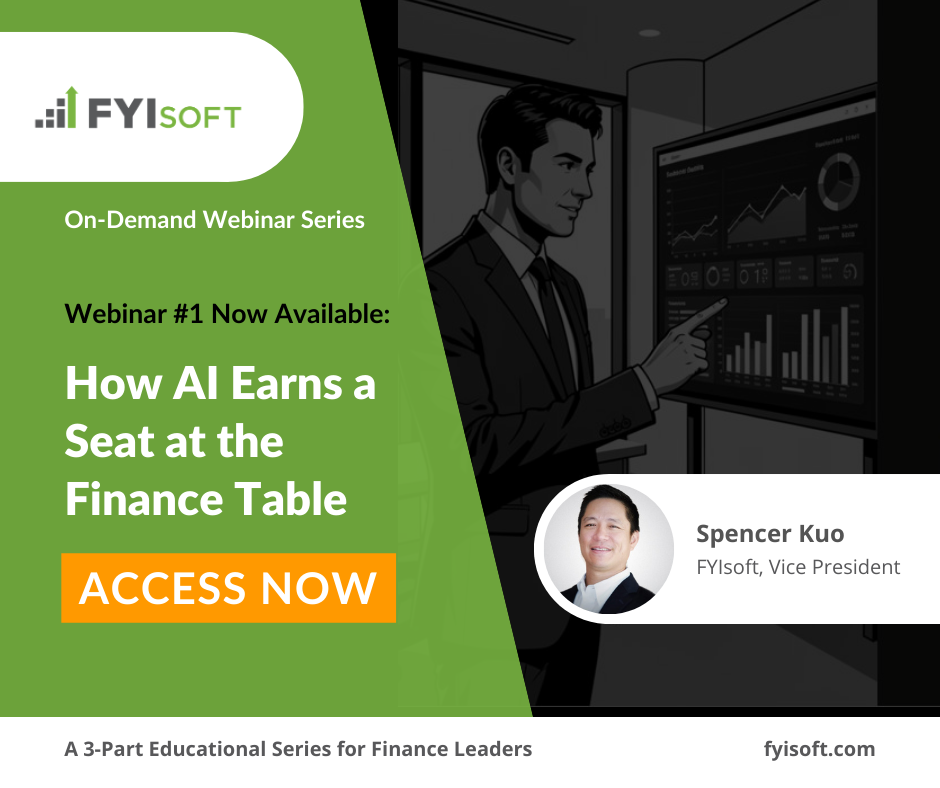
Register to Watch Webinar 1 Now
CFOs want AI. Most don't trust it.
Gain the clarity and confidence needed to expand analysis capacity without compromising control, compliance, or credibility.
Learn how privately deployed, governed, and explainable AI shifts the conversation from risk to asset. When properly embedded within your control environment, AI can strengthen SOX compliance, standardize variance thresholds, document analytical reasoning, and reduce human inconsistency.
This three-part executive series provides a roadmap for responsibly adopting AI in finance—from establishing trust and governance, to applying AI in real reporting workflows, to building a credible business case for approval and investment.
Introducing Telli: the private, governed AI financial analyst that CFOs have been waiting for. JOIN THE WAITLIST
A 3-Part Educational Webinar Series: AI in Finance
This is a progressive 3-part educational track providing CFOs with a structured framework for evaluating and leveraging AI responsibly.
Available Now
The CFO Aha Moment: How AI Earns a Seat at the Finance Table
Coming Soon
Reports to Insight—How Finance Uses AI Without Losing Control
Coming Soon
Making the Business Case for AI in Financial Analysis
Frequently Asked Questions
AI can be trusted in financial analysis when it operates on governed reporting outputs, provides explainable reasoning, and fits within existing finance controls. The risk is not AI itself—it’s using AI without clear governance, traceability, and review processes.
AI is safe for financial reporting when it is privately deployed, role-based, and aligned to your organization’s control environment. Safe AI in finance requires data security, access controls, documented outputs, and the ability to validate how conclusions were reached.
The primary risks include data exposure, lack of explainability, inconsistent outputs, and overreliance on unreviewed narratives. Without governance, AI can introduce compliance and audit concerns. With proper controls, however, it can strengthen consistency and documentation.
AI can accelerate variance investigation by identifying key drivers, detecting anomalies, comparing across periods and entities, and generating draft narrative explanations. When properly governed, it expands analysis capacity without replacing finance judgment.
No. In finance, AI is most effective as an augmentation tool—not a replacement. It accelerates analysis and draft explanations, while finance professionals validate conclusions, apply business context, and maintain accountability.
AI can introduce risk if deployed without oversight. However, governed and explainable AI can strengthen SOX environments by standardizing thresholds, documenting analytical procedures, reducing manual inconsistencies, and supporting audit-ready traceability.
CFOs should evaluate AI based on governance alignment, explainability, security posture, workflow fit, and audit defensibility—not just speed or automation features. The key question is whether the AI strengthens or weakens the control environment.
This three-part executive series provides a roadmap for responsibly adopting AI in finance—from establishing trust and governance, to applying AI in real reporting workflows, to building a credible business case for approval and investment.